Helping Your Toddler Through Drop-Off Anxiety in {{City, State}}
Quick Answer
Drop-off anxiety is one of the most common experiences for toddlers starting a new Montessori program — and it’s a completely healthy sign of secure attachment. In a Montessori environment, Guides are specifically trained to support this transition with warmth, consistency, and routines that help your child build confidence from day one. If you’re navigating this in [City], [State], you’re not alone, and it does get easier.
When the Goodbye Gets Hard
Some mornings the transition is seamless. Your toddler spots a friend, drops your hand, and you’re already forgotten before you reach the door. Other mornings bring tears before you reach the entrance as your toddler navigates a surge of separation anxiety.
Most families experience both rhythms during the early weeks of school. Understanding what your toddler is experiencing, and how the Guides at [School Name] respond with observation and care, brings clarity and peace of mind to this transition.
What Drop-Off Anxiety Actually Tells You About Your Child
When your toddler cries at drop-off, they’re showing you something important: they feel safe with you. Separation anxiety is most common in children who have a secure, trusting attachment to their caregivers. Your child knows you matter, and they don’t yet have the developmental language to say “I’ll be okay and I’ll see you soon.” So they say it the only way they know how.
Most toddlers between 18 months and 3 years are right in the thick of this developmental window. Their understanding of time is still forming, so “I’ll be back after lunch” doesn’t land the way it does for an older child. What they do understand is consistency — the same face at the door, the same words from you, the same first activity waiting for them.
According to The Montessori Notebook, a Montessori approach to separation anxiety leans heavily on predictability and the prepared environment. When the space itself feels familiar and welcoming, children develop the internal confidence to move through their discomfort more quickly — and more completely.
How Montessori Guides Support the Transition
The Guide’s role during drop-off is one of the most intentional parts of a Montessori morning. Rather than redirecting your child away from their feelings, a trained Guide acknowledges what the child is experiencing and offers a calm, consistent bridge into the day.
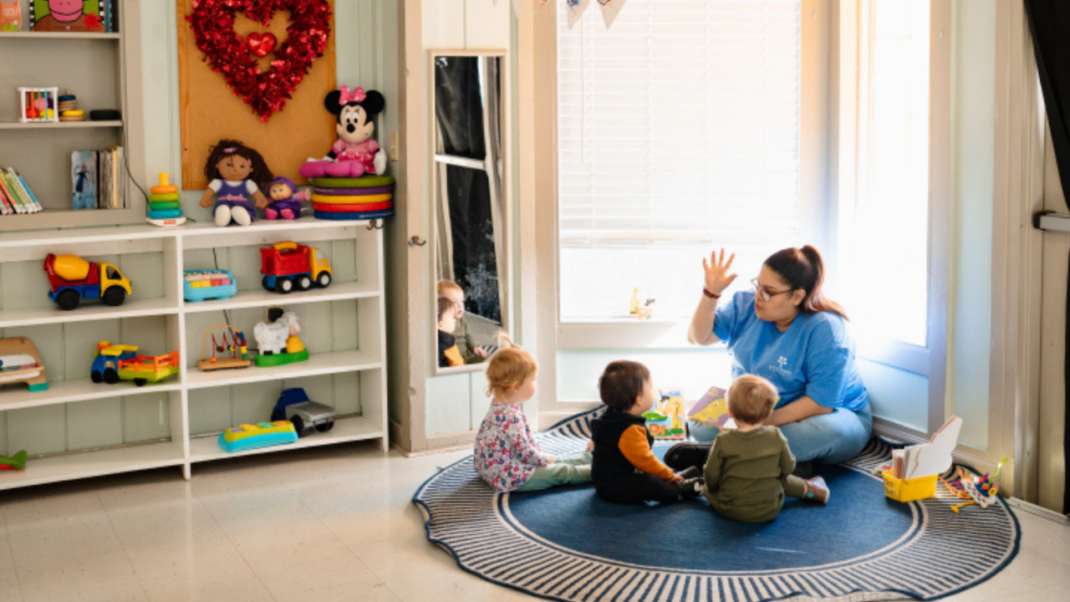
This often looks like a specific greeting ritual — a handshake, a special phrase, a first activity the child can count on. These small rituals work because toddlers thrive when they know exactly what comes next. Over time, the ritual becomes its own signal: this is the beginning of a good day.
Guides at [School Name] also observe carefully during these early weeks. They notice which materials draw your child’s interest most easily, which children they’re beginning to watch and move toward, and what the rhythm of their morning settling looks like. That knowledge shapes how they position your child’s day in the weeks that follow.
What You Can Do Before and During Drop-Off
The goodbye itself is one area where your approach makes a real difference. A few things that consistently help:
- Keep your farewell short and confident. A long, lingering goodbye — however well-intentioned — often makes the transition harder. One warm, clear goodbye and a specific promise (“I’ll pick you up after rest time”) gives your toddler something to hold onto.
- Build a drop-off ritual at home. What happens in the car, what song you listen to, how you walk in together — these signals prime your child’s nervous system for the transition before you even reach the door.
- Trust the Guide to take the handoff. When you hand your child to a Guide and leave calmly, you are communicating something your toddler can feel: this place is safe and you are confident they will be fine. Children read that more clearly than most parents expect.
What the First Few Weeks Usually Look Like
Separation anxiety at drop-off tends to follow a pattern. The first few days are often the hardest. Then there’s usually a brief easier stretch, sometimes followed by a second wave around the two-week mark as the novelty of the new environment fades and the reality of the routine sets in.
By weeks three and four, most children have developed what Montessori educators call normalization within the environment — a sense of ownership and belonging in the space. You’ll start to notice signs: your child walking in a little faster, asking about a specific material or a child they’ve been watching, talking about the Guide at dinner.
Those small moments are worth paying attention to. They’re the transition working exactly as it should.
Frequently Asked Questions
How long does drop-off anxiety usually last in toddlers?
For most toddlers, the hardest drop-off period lasts two to four weeks. Some children settle within a few days, and others take a little longer depending on their temperament and prior experience with group care. Consistency from both home and school makes the biggest difference in shortening that window.
Should I stay longer at drop-off if my toddler is really upset?
Staying longer often extends the distress rather than easing it. A warm, brief goodbye followed by a confident departure gives your child a clearer signal that the transition is safe. If drop-off distress continues past the four-week mark without improvement, it’s worth a conversation with your child’s Guide to look at what might help.
What does the Montessori Guide do after I leave?
Your child’s Guide will offer a calm, familiar greeting, gently guide your child toward an activity that matches their current interests, and give them the space to settle at their own pace. They’re observing throughout — tracking what’s drawing your child in and what the morning rhythm looks like — so they can keep building on what works.
Is it normal for drop-off to get harder before it gets easier?
Yes, completely. Many families notice a second, shorter wave of separation anxiety around weeks two or three, just as the initial excitement of a new environment settles down. This is a normal part of the adjustment process and usually resolves more quickly than the first wave.
Can a Montessori prepared environment actually help with separation anxiety?
The structure of the Montessori environment — materials at child height, predictable order, a clear invitation to work — gives toddlers something concrete to move toward the moment they arrive. When a child knows where things are and has experienced the satisfaction of choosing their own work, the environment itself becomes reassuring. That sense of familiarity and competence is one of the things that helps separation anxiety ease naturally over time.
Support That Lasts All Year
Drop-off mornings grow smoother over time. Soon, your child will confidently step into the classroom independently, ready to begin their morning work.
We’d love to show you how we support families through the transition from the very first visit. Schedule a tour at [School Name] in [City], [State] and meet the Guides who will be walking alongside you and your child every step of the way.
Related Posts
All Posts
Building a Montessori Partnership: Questions to Ask Educators
Practical Life Activities for Montessori Families in {{City, State}}